Introduction

Welcome to the Tesla Coil Design, Construction and Operation Guide. Anyone with some electronics knowledge, free time and necessary parts can build a Tesla coil. I hope this guide will serve as a comprehensive step-by-step reference with easy-to-follow instructions covering all aspects of Tesla coil design, construction and operation.

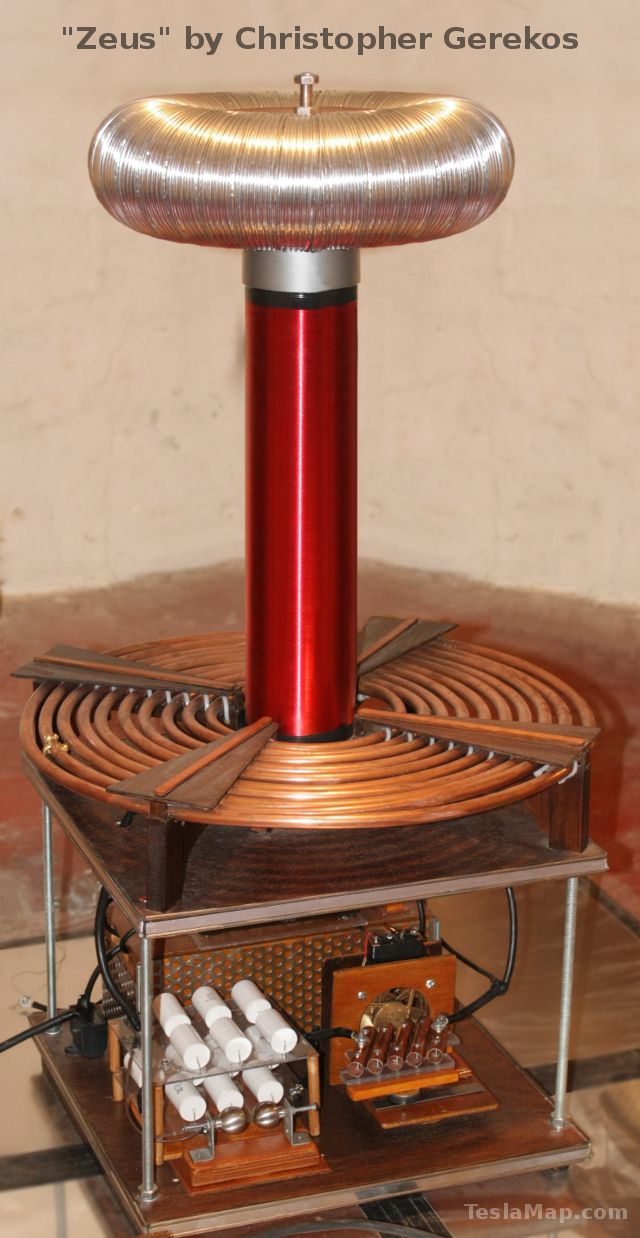
A Nice Tesla CoilChris Gerekos
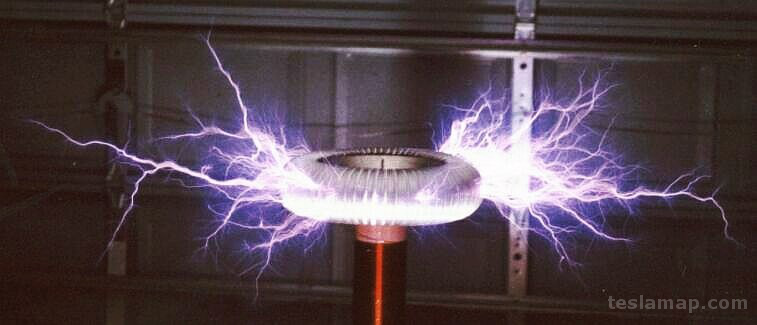
TeslaMap Tesla coil
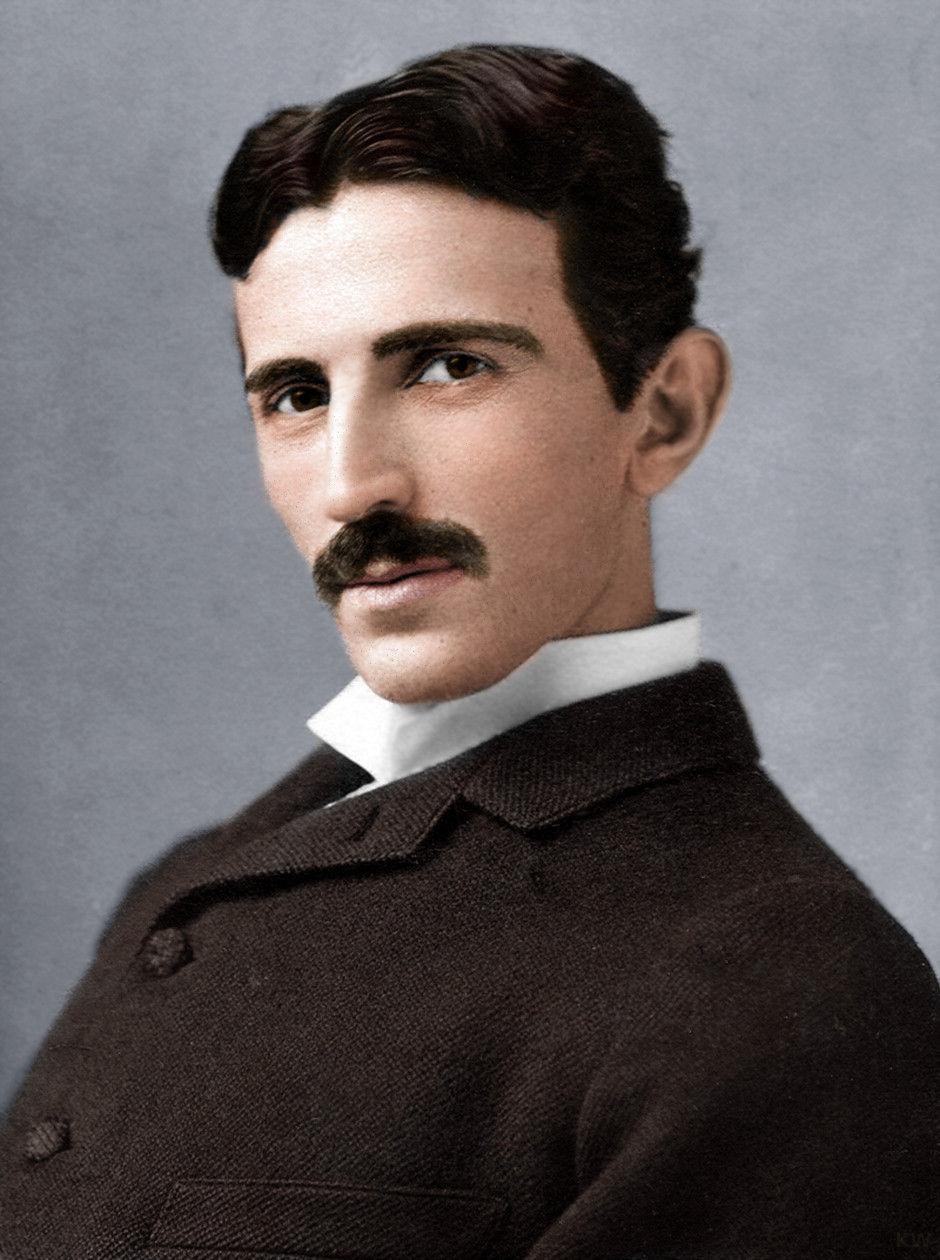
Nikola Tesla
 

What can you learn from this guide? This page contains instructions for building traditional (not solid state) Tesla coils that can easily produce over 4 foot (1.2 meter) arcs using commonly available parts. The guide includes schematics, pictures, parts lists, equations, helpful tips and much more.

First, I'll guide you through the design process and show you what parts you'll need to build your Tesla coil. Next I'll give you instructions and schematics to assemble your parts into a Tesla coil. Finally I'll tell you how to make the necessary adjustments and offer troubleshooting tips to get your Tesla coil running.

This guide was written to be used in conjunction with the TeslaMap program to make the design process fast and easy. Sample Tesla coil designs are included with the TeslaMap program. TeslaMap is ideal for quick and easy Tesla coil design, however it is not a Tesla coil modeling program. A more accurate program called JAVATC written by Bart Anderson can provide more detailed Tesla coil parameters.

I try to assure that all the information in this guide is correct, but new research is continually producing new techniques, technology brings us new equipment, and old ideas are being improved or discarded. I'm not a Tesla coil expert, just a hobbyist. Please let me know if you have a correction or suggestion by emailing me at teslamap@gmail.com. Many of the real Tesla coils experts (Terry Fritz, Bart Anderson, John Freau, Bert Hickman... just to name a few) can be found at the Tesla Coil Mailing List.

Solid state Tesla coils are not covered, but traditional Tesla coils and solid state Tesla coils share the same basic principle of operation and have several parts in common.

Click on most of the pictures to see them enlarged. Search this page by hitting Ctrl and F.

Please feel free to email me at: moc.liamg@paMalseT if you have any questions or suggestions.

Good luck building your Tesla coil!

info

Note - Many people have realized our fiat monetary system and corrupt political leadership will likely lead to increased financial and political disorder - and possible electrical outages and price increases. I'm often asked if a Tesla coil can be used to generate power. No, a Tesla coil cannot harvest free, ambient energy, operate at "over-unity" or generate any useful power. If you're concerned about power outages and want to be energy independent, I recommend solar panels and / or wind turbines with batteries to supply electricity. Please be very cautious about "free energy" or "over-unity" scams.

Index

Safety

Safety precautions.

Design

Design process overview.

Parts

All the parts that make up a Tesla coil, what they do, how to make them, where to find them.

Calculations

A list of calculations required to complete the Tesla coil design.

Construction

An overview of Tesla coil construction.

Materials

A list of materials you are likely to need.

Required Tools

A list of tools you are likely to need.

Wiring

A few details about wiring your Tesla coil.

Grounding

An overview of proper grounding.

Adjusting Gaps

How to adjust your gaps for optimum and safe operation.

Tuning

An overview of the tuning process.

Troubleshooting

A few things to check when problems arise.

FAQ

Frequently asked questions.

Helpful Links

Where to find parts and more information.

Theory Of Operation

A short and basic overview of Tesla coil operation.

Tesla Coil Safety

TeslaMap Bad wire
 

Before we get started I'll take a moment to mention the most important aspect of Tesla coils - safety. Tesla coils are potentially fatal. Please do not attempt to build a Tesla coil without knowledge and experience with high voltage electricity.

When working with Tesla coils it's likely you'll be exposed to very high voltages and currents, charged capacitors, exposed wiring, strong electric and magnetic fields, induced currents, fire dangers, chemical and explosion dangers, ozone, ultraviolet light and loud noise.

When running a Tesla coil be sure to have fresh air, hearing protection and do not look directly at the spark gaps. Try not to work alone and never work when tired or under the influence of alcohol, drugs or medications. Have a fire extinguisher and safety glasses near. Tesla coils may interfere with pacemakers.

warning

Through the guide I use this area for information that is potentially dangerous. Please pay careful attention to this information.

This is a list of guidelines found at The Tesla Coil Mailing List:

warning

Don't touch the arcs. They can seriously injure or kill you.

The arcs generated by a Tesla coil are dangerous. You may have seen people touching the arcs or shooting arcs out of their fingers, but they are experienced experts using carefully controlled conditions. Without proper precautions the arcs can easily burn or kill you. The "skin effect" will offer some protection, but not complete protection all of the time. You can look, but do not touch!

The NST is especially dangerous because it supplies several thousand volts and you'll be working in close proximity to it. It's easy to accidentally leave it turned on. Except for a very quiet humming, there's no indication it's turned on.

Many electrical / electronics engineers spend a lot of time behind a computer, writing reports, reviewing data, etc. Getting your hands dirty doing actual work is the only way to gain real experience. Some engineers may be at risk of overestimating their hands-on abilities. Constructing a Tesla coil is a very hands-on endeavor, so please don't let your college degree get you killed!

Tesla coils can generate strong RF interference. It's usually not a problem, but it is a potential problem. Generally the FCC does not like RF interference and laws are in place that make it illegal to produce RF interference. The interference can be reduced or eliminated with proper grounding and the use of a Faraday cage.

A good Tesla coil safety document is available on the classictesla.com site.

All about Circuits - Electrical Safety is a good source of information.

Do you think you're ready? Take the Safety Quiz now and find out!

The Tesla Coil Design

To design your Tesla coil you'll need to decide on a few parameters. These include:

Don't worry if you don't know what these parameters are, I'll explain all that soon. Before you start your design you should learn about all the parts that make up a Tesla coil. Keep those required design parameters in mind when you're learning about the parts. If you already have your design worked out then you can proceed to the construction section.

Parts

Every Tesla coil is unique. In this guide I show the most common designs and materials. Your design and choice of materials will likely differ depending on availability of materials, design improvements and personal tastes. I encourage you to be creative and experiment with your own designs. You may find something that works better than anything yet developed.

If you prefer to buy completed parts I recommend Tesla Stuff. For several years Alan has provided high quality Tesla coil components and plans including "hard to find" and "one of a kind" items.

Power Supply

TeslaMap NST (Neon Sign Transformer)
TeslaMap NST Solid State
MOT (Microwave Oven Transformer)
TeslaMap  Pole Pig Transformer
 

The power supply is a step up transformer used to charge the primary capacitor. You should choose a transformer that puts out at least 5kV, otherwise you may have problems with the spark gap not firing.

Neon sign transformers (NSTs) are the preferred power supplies. Recently manufactured NSTs include a GFCI (ground fault circuit interrupter) also known as a GFI (ground fault interrupter) circuit that will "trip" or automatically shut off a NST when it detects an unusual current in the output of the NST. Unfortunately Tesla coils produce current spikes that frequently cause the GFCI circuit to shut off the NST, making NSTs with GFCI unreliable in a Tesla coil. NSTs with a GFCI circuit will usually have a GFCI reset button somewhere on the case or possibly under the top cover. It may be possible to rewire and bypass the GFCI circuit in the NST, although it may be a very difficult process depending on the complexity and location of the GFCI wiring. Newer, small NSTs are actually solid state power supplies that are unsuitable for Tesla coils. I strongly recommend using an older NST to power your Tesla coil. A good NST should be very heavy and only contain a primary winding, secondary winding and metal core. The output frequency should be the same as the input frequency (50 or 60 Hz).

Other transformers can be used such as oil burner igniter transformers (OBITs), microwave over transformers (MOTs) or the distribution transformers used in the power grid, often seen on telephone poles and sometimes referred to as "pole pigs". Pole pigs are sometimes given away by the power companies, but they are extremely heavy.

warning

Pole pigs have no current limiting and can easily kill you. Some may contain hazardous chemicals such as PCBs. I do not recommend using pole pigs to power a Tesla coil unless you really know what you're doing!

Another option is a bombarding transformer. My information is limited, but they seem to be high power transformers used to make neon signs. They typically operate around 450-800 mA at 22-26 kV. They are apparently very heavy (150-200 lbs), expensive and difficult to find. I'll add more information as I learn more.

NSTs are usually fairly easy to obtain, safer than other transformers due to internal current limiting and are fairly robust when used with the proper protection circuit. Used NSTs can be much cheaper than new ones. They can be found at sign shops and salvage / recycling centers. Typically they either work or they don't. To test a NST, simply wire it up and check for arcs between the output terminals, or each output terminal to the case (assuming the case is grounded).

If a NST dies, the cause of death is sometimes arcing through the internal potting material. Potting is an insulator, usually a hard, tar like substance. The NST can be resurrected by removing the top of the case and heating the NST over a grill to melt the potting material. Baking in an oven is not recommended because of toxic fumes and leaking potting material. Once the potting is melted it can be stirred to remove the short or poured out and replaced with transformer oil. This process is very messy and probably not worth the effort if another NST can be found. The use of solvents to dissolve the potting material may also be an option.

NSTs have shunts or metal plates between the primary and secondary coils which limits the current even when the output is shorted. The current limiting makes NSTs safer and more robust than other transformers. The shunts can be removed to provide a bit more current, but the chances of winding damage increases.

The primary, low voltage side of a NST should be wired through a line filter which is connected to the house or building mains. A PFC cap should be wired across the primary terminals, but the NST can be run without it. Common NST power outputs are 9kV, 12kV and 15kV @ 30mA or 60mA.

TeslaMap NSTs Wired in Parallel
 

NSTs can be wired in parallel to supply additional current to the Tesla coil. Do not try to wire them in series, the extra voltage will short the secondary windings. NSTs with different output currents can be wired in parallel, but if the output voltages are significantly different (more than a few volts), one NST will begin to overheat. Follow this procedure to test NST compatibility:

  1. Determine the phase of the NST outputs by checking for arcs between the output terminals of the NSTs. Connecting an output terminal of one NST to an output terminal of the second NST (leaving a small spark gap). If you see an arc then the terminals are out of phase.
  2. Put a mark on the output terminals that are in phase. Also mark the low voltage input terminals since switching one of the input terminals will switch the phase of the output terminals.
  3. Connect a 1 kOhm 1/4 watt resistor between the output terminals in phase.
  4. Run the NSTs for a few minutes, disconnect power from the NST and see if the resistor is hot.

Obviously, you need to disconnect power to the NSTs before touching the resistors. If the resistor heats up then too much current is flowing through the NSTs and they should not be used in parallel.

PFC Capacitors

PFC Capacitors No electrolytic caps
 

Power factor correction (PFC) capacitors are used to correct the power factor of the AC connected to the NSTs.

The power factor will be degraded due to the large inductance in the NSTs which causes a phase shift of the voltage and current. The capacitance in the PFC cap will realign the voltage and current phase. The amount of capacitance should be matched to the amount of inductance so the capacitance and inductance will cancel each other. The PFC capacitance does not have to be exactly matched to the transformer. Often the PFC cap is smaller than the recommended size. Go ahead and use it, every bit will help. Multiple PFC caps can be wired in parallel to increase the capacitance. If you can't get any PFC caps the NSTs can be run without them.

Be sure to use only "run" type capacitors, as opposed to "start" type capacitors. Start capacitors are designed to only be used for short periods of time, to start a motor for example. They will overheat and possibly explode if run continuously. Electrolytic caps should not be used as PFC caps, they'll also heat up and pop. The PFC caps should be wired across the low voltage inputs of the NST.

PFC caps can be found in salvage / recycling centers on AC motors, washing machine motors, refrigerator motors, etc. I believe it's against the law to bury PFC caps because they contain hazardous chemicals, and recycling centers will usually have a pile of them waiting for you. PFC caps can also be ordered on the Internet.

The optimum PFC capacitance is calculated as:
PFC Capacitance = (NST VA / (2 * pi * NST Input Frequency * (NST Input Voltage ^2))) * 1000000
The TeslaMap program will calculate the optimum sized PFC cap for your NST.

Line Filters

AC Line Filters
AC Line Filter
AC Line Filter Schematic
 

Line filters are used to prevent high voltage spikes from traveling back into the house or building wiring.

They usually consist of a capacitor to shunt the high frequencies to ground. Most will also use inductors to cut down the high frequency spikes. Some may have MOVs to shunt voltage spikes to ground.

The line filter should be wired in series with the mains power. It should be wired as far from the Tesla coil as possible. If it's wired too close, the wires behind the filter may have induced voltages that bypass the filter. When wiring the filter some people recommend wiring the filter in reverse (the output leads to the house wiring). The logic being that the filters are normally used to protect a device from spikes in the house wiring, but we're using it to protect the house wiring from the device. Other people recommend the standard connection orientation. I think it will work either direction, but I'll let you decide.

Filters can be bought on the Internet or salvaged from equipment. It's possible to make your own, but it's usually much easier to buy one. Be sure to use a filter that's rated for the power supply used by the Tesla coil.

NST Protection

TeslaMap NST Protection Filter
Nice NST Protection Filter
NST Protection Filter Schematic by Terry Fritz Terry Fritz

The wire in the NST secondary coil is very, very thin and susceptible to high voltage spikes generated in the primary circuit. A low pass filter will help protect the NSTs from voltage spikes and premature death.

I've been using a filter known as the "Terry filter" designed by Terry Fritz for several years with great success. Several other people have also had good success with the filter. The filter is a typical RC low pass design that consists of several caps wired in series to shunt high frequency spikes to ground and high power resistors to decouple the NSTs from the primary circuit. The Terry filter has 1000 ohms of resistance and 0.28nF of capacitance resulting in a cutoff frequency of about 570 kHz. A spark gap allows high voltage spikes to pass to ground. The spark gap should be set just wide enough so it does not short when connected directly to the NST output. I omitted the MOVs in my filter, although I'm sure they would help shunt voltage spikes to ground. Each cap has a high resistance bleeder resistor across the leads. The bleeder resistors should not be in direct contact with the capacitor case as arcing can occur. Several caps are wired in series to handle the high voltages from the NST output. The total voltage rating of the series caps should be 3 times the peak voltage of the NST output, although good quality caps can be run at their rated voltage.

warning

Always solder bleeder resistors in parallel with each capacitor. The high resistance will allow the caps to slowly discharge and prevent them from holding a dangerous charge.

The type of cap used is not quite as important as cap selection in the MMC. Polypropylene film foil type are preferred, metalized caps should be avoided.

Safety gaps should be placed across any component that can be damaged by high voltage. There should always be a safety gap across the NSTs and primary capacitors. The gap can be as simple as 2 bolts. No quenching is required.

Primary Capacitors (MMC)

An MMC array
An MMC array
An interesting MMC on PVC by Bart Anderson Bart Anderson
A MMC array from Terry Blake Terry Blake
MMC Bleeder Resistors
TeslaMap MMC schematic with optional tap and string
 

The primary capacitor is used with the primary coil to create the primary LC tank circuit.

The primary capacitor is usually made of several dozen caps wired in series / parallel called a Multi-Mini Capacitor (MMC). A single pulse type capacitor can be used, but they are harder to find, cannot be adjusted and more difficult to replace. When a MMC fails, it can usually be fixed by replacing a couple individual caps, but if a pulse cap fails it must be replaced. Other types of capacitors can be made, including salt water beer bottle caps and rolled aluminum foil caps. Neither is a good option. Salt water beer bottle caps are inefficient and it's difficult to know how much capacitance you're working with. Rolling caps out of aluminum foil and plastic insulators have not shown much success. Often the plastic will have microscopic holes or weak spots that quickly short out. Small air pockets between the layers heat up and can explode. An entire rolled cap needs to be submerged in oil to reduce corona, which can be messy. Despite the higher cost, I recommend sticking with factory produced caps. The primary capacitor is run under extremely demanding conditions. It's exposed to high voltages and very short charge / discharge cycle times. Factory caps can tolerate these conditions better than anything most of us can make ourselves at home.

Caps usually have a VAC and VDC rating. When using caps as the primary capacitor in a Tesla coil, they will only be charged and discharged for a very short time. Because the caps are "pulsed", we can use the VDC rating when designing the MMC. Although it seems odd, the VAC rating should be ignored. Normally 1.6kV to 2kV caps are used in the MMC array. Several caps are wired in series to provide adequate voltage rating. It's good practice to construct the MMC with 2 or 3 times the peak voltage rating from the NST, although good quality caps can be run close to their specified rating. Terry Fritz tested three CD942C20P15K capacitors at their rated DC voltage and they lasted for 75 hours before failing. Although 75 hours may not seem like a long life expectancy, most Tesla coils are only run for short intervals. A typical MMC will have about a dozen caps in each series sting. Normally a few series strings will be wired in parallel to provide adequate capacitance. The TeslaMap program has a MMC calculator that makes MMC design fast and easy.

Many people eventually upgrade their Tesla coil by switching to a rotary spark gap or adding additional NSTs. Both of these changes will affect the required MMC capacitance. It's prudent to consider future upgrades when planning and constructing your MMC. The MMC can be constructed with tap points between the capacitors so the capacitance of the array can be easily adjusted. It's also a good idea to consider leaving space to add an additional series string of capacitors in the future. Occasionally a cap in the MMC may fail, so the MMC should be designed so it's easy to replace a cap.

warning

MMC caps can explode (actually just pop) and / or catch fire when they fail. The MMC should be designed and located to minimize damage if a cap fails.

A 1 to 10 Mohm bleeder resistor should be wired across each capacitor to prevent the caps from holding a dangerous charge. The bleeder resistors should not be in direct contact with the case of the capacitor as arcing can occur. It's a good idea to solder the resistors to the underside of the pref board, or whatever you mount the caps on. When wiring the MMC it's best to twist the capacitor leads together then solder. Don't bother etching copper tracings on the circuit board. The thin copper can't handle the current in the MMC.

warning

Always solder bleeder resistors in parallel with each capacitor. The high resistance will allow the caps to slowly discharge and prevent them from holding a dangerous charge.

I recommend keeping all connections in the MMC as short as possible, especially connections that connect the different series strings. Long or poor connections between the series strings can create an imbalance of current through them. The strings closest (with the least resistance) to the main connection will receive more current.

It's important to use the correct type of caps in the MMC. Most caps are not designed to handle the high frequency, high voltage charging and discharging in a Tesla coil. Look for these qualities in a good MMC cap:

Avoid "metalized" or "metal film" (the metal film is too thin to handle Tesla coil currents). Avoid polyester capacitors.

dV/dT is an important specification in Tesla coil capacitors. It states how fast voltages can change in the capacitor. Tesla coils operate at high voltages and high frequencies so it's important to use caps with high dV/dT ratings. The dV/dT is usually stated as V/uS. dV/dT is calculated as:
dV/dT = 2 x pi x Vpeak x Frequency
For example:
If we have a MMC running at 15kV RMS (15000 * 1.414 = 21kV peak) but we have 10 series caps in our MMC so each cap has 2.1kV
and 160kHz resonate frequency (TeslaMap can calculate the resonate frequency).
dV/dT = 2 x pi x Vpeak x Frequency
dV/dT = 2 x pi x 2100 x 160000
dV/dT = 2111150263 V/S
dV/dT = 2111 V/uS
(I think that's correct)
So under these conditions you should choose caps with a minimum dV/dT of about 2000 V/uS.

You can use dV/dT to estimate peak current by using the following calculation:
Ipeak = Capacitance * dV/dT
Using our dV/dT from above with a 0.056uF cap:
Ipeak = 0.000000056 * 2111150263
Ipeak = 118amps
That's a lot of current!


The following is an old good / bad cap list. Some of the caps may no longer be available. The VDC rating is used because the caps are pulsed in a Tesla coil.

Recommended MMC Caps

Manufacturer Part Number Voltage (VDC) Value (uF)
Cornell Dubilier 941C series (1)
942C20P15K
942C16P15K
942C20P10K
942C20S47K
942C20S68K
942C series untested*
943C series untested*
600-3000
2000
1600
2000
2000
?
1600 - 2000
1600 - 2000
0.01-4.7
0.15
0.15
0.1
0.047
0.068
 
 
Panasonic ECW-H16473JV
ECW-H16563JV
ECW-H series untested*
1600 0.047
0.056
.0047-.056
Seacor KP25 1600 0.047
SB Electronics 16PSS50 1600 0.05
Arcotronics RS-114-474
KP1-72
1500 0.047
0.1
Wima FKP-1
FKP-4 untested*


Phillips KP/MMKP
KP/MMKP-376
2000
1600
0.0047
0.056
Mallory PVC1611 1600 0.01
Illinois Cap. 683PPB202K
683PPB102K
2000
1000
0.068
BC Components BC1971-ND 1600 0.01
Evox RIFA (Kerment) PHE450 (2) 2000 0.15

* Not all of the caps listed in this row have been tested. They should work, but please check the capacitor specifications (dV/dT, RMS current, etc.)
(1) Approved by Dr. Resonance
(2) Tested by Matt


Not Recommended For MMC Caps
Note - Some of these caps can work in a Tesla coil, but they have poor dV/dT specs and will fail sooner than the recommended caps.

Manufacturer Part Number Voltage (VDC) Value (uF)
Cornell Dubilier 940C20S33K
avoid the 940 series
2000
 
0.033
 
Phillips MKP336-2
G.E. 42L4102 3000 0.01
G.E. 42L3332 2000 0.33

The optimum primary capacitance is calculated as:

Primary Resonate Capacitance = (1 / (2 * pi * NST Impedance * NST Input Frequency)) * 1000

Primary LTR (Larger Than Resonate) Capacitance (with Static spark gap) = Primary Resonate Capacitance * 1.618

Primary LTR (Larger Than Resonate) Capacitance (with sync spark gap) = Primary Resonate Capacitance * 1.9 (no longer used)

Primary LTR (Larger Than Resonate) Capacitance (with sync spark gap) = 0.83 *(NST Output Current / (2 * NST Input Frequency) / NST Output Voltage) * 1000

NSTs do not operate well with resonate capacitance. A resonate sized cap can cause a condition known as resonate rise which causes voltages in the primary circuit to increase far above normal levels. These high voltages can easily damage a NST, so NSTs should only be used with LTR (Larger Than Resonate) primary capacitors. To minimize the risk of a resonate condition in the primary circuit I use a MMC at 1.618 times the resonate size. The ratio of 1:1.618 is known as pi or the golden ratio. Any two numbers in this ratio will have the fewest common multiples which will result in virtually no chance of resonance.

Caps can be ordered on the Internet, although they may be difficult to find. Sometimes a fellow coiler will order several hundred and resell them to other coilers. The following links should be a good starting point:
Tesla Stuff
octopart.com

Spark Gap

Basic static spark gap
Nice static spark gap from ozonejunkie.com ozonejunkie.com
A Richard Quick Static spark gap
A Richard Quick Static spark gap schematic
A vacuum quenched static sucker spark gap
A flex adjustable variation of the RQ gap
A disk sync gap from John Freau John Freau
A propeller sync gap from Terry Blake Another propeller sync gap from Terry Blake Underside of the propeller sync gap from Terry Blake Spark Gap Spark Gap Terry Blake

The spark gap is used as a switch to momentarily connect the primary capacitor to the primary coil. When the gap is shorted the cap is allowed to discharge into the coil.

Many spark gap designs can be used. Spark gaps come in two basic designs: static and rotary. When the gap electrodes are stationary, the gap is referred to as a "static" gap. A rotary gap uses rotating electrodes.

The most simple design is a static gap consisting of 2 bolts, wires, drawer knobs, etc that act as the electrodes. The electrodes should be smooth and rounded with no sharp edges that could cause the gap to short erratically. The gap between the electrodes is set to a specific width. The width determines the voltage required for the gap to short. The ideal gap will short just as the primary cap reaches it's peak voltage. These gaps should be designed to allow small and easy adjustments to the gap width. Knobs screwed onto bolts are a good choice. Adjustments are made by screwing the knob off or on the bolt.

Static gaps are the most simple gap design, but they have some shortcomings. Often the gap will continue to short after the cap voltage has fallen below it's peak. This happens because the air between the gap becomes ionized when the gap shorts. The ionized air is more conductive and allows the gap to remain shorted. The performance of a static gap can be improved by blowing air through the gap. This is called "quenching" the gap. The goal of quenching is to blow the ionized air out of the gap. I've used 12 volt computer case fans, others have used vacuum cleaner motors. Generally the more air you can blow through the gap the better.

A Richard Quick (RQ) design uses several copper tubes to divide up the spark gap into multiple smaller gaps. The Richard Quick design usually performs better than a standard static gap.

A better gap design uses a motor to move the gap electrodes to control the gap shorting. This design is called a "sync" or "async" design, depending if a synchronous or asynchronous motor is used. NSTs should only be used with static gaps or sync motors. Sync gaps come in 2 basic designs: disk and propeller. The disk design is more common and uses a disk mounted on the motor shaft. The disk has electrodes placed around the edge that rotate and line up with stationary electrodes to create the spark gap. A propeller design looks like an airplane propeller. The electrode is mounted on the motor shaft and rotated to line up with stationary electrodes to create the spark gap.

Smaller or weaker sync motors may have trouble turning a disk or propeller. In this case the motor may not start or it may lose sync. When the motor loses sync it will attempt to re-sync. During this time the RPMs will vary slightly as the motor "hunts" for the sync RPM. If this is a problem then a lighter propeller gap is a good solution. The rotational power of a sync motor is called torque and is usually measured in in/oz (inch ounces). Torque can be complicated, so I prefer to use watts when dealing with sync motors. For most rotary spark gaps the motor should produce at least 10 to 15 watts. More is always better. I have not had much success with 5 watt sync motors.

warning

Care must be taken to avoid an electrode being thrown out of the gap at high speeds. Rotary gaps should always be mounted in a box or with some walls to contain a loose propeller, disk or electrode. Terry Blake has a good bit of info on gap safety here: http://www.tb3.com/tesla/sparkgaps/safety.html

Typically the gap is designed to short or "break" 120 times a minutes (120 BPS) when run from a 60Hz supply. This will correspond to the 60Hz primary cap charging. It may sound like the spark gap will be firing twice the required rate, but remember that the 60Hz includes a positive and negative peak, so the gap fires on both peaks.

Sync motors will always run at a multiple of the input frequency. Common speeds are 1200 RPM or 3600 RPM for 60Hz input frequencies. The number of electrodes will need to be chosen to provide 120 BPS depending on the motor RPM.

RPM = Rotations Per Minute
RPS = Rotations Per Second
BPR = Breaks Per Revolution (required for 120 BPS)

Sync Motor RPM and Required Electrodes

RPM RPS BPR Electrodes
3600 60 2 2
1800 30 4 4
1200 20 6 6
900 15 8 8

I do not recommend a disk diameter smaller than about 5 inches, especially with high RPM motors because they can create a swirling cloud of ionized gas in the gap. Smaller disks on higher RPM motors can have problems with gap quenching - although some forced airflow can improve gap quenching.

Old sync motors can be found on record players or old computer reel equipment. Some have been found at military surplus stores. New ones can be ordered online. Hurst and Oriental Motor makes good motors.

Terry Blake has a lot of really good information on rotary spark gaps here: http://www.tb3.com/tesla/sparkgaps/index.html

Spark gaps must cope with extremely high currents. Most electrodes will quickly develop burning and pitting on the surfaces. Tungsten is a good choice of spark gap electrodes. It has the highest melting point of any metal so it resists pitting. It can be found as welding rods, in drill bits, etc. Tungsten welding rods come in several different types, each with different properties. The rods have a colored band on the end to identify the type of rod. The color code is:
Green (Pure)
Red (Thoriated)
Black, Gold or Blue (Lanthanated)
White or Brown (Zirconiated)
Orange (Ceriated)
Gray (Rare Earth)
Note - The color code can very between countries.

I have not experimented with different types of tungsten rods, so I won't recommend a particular kind. However, just to be extra safe, I'd avoid the thoriated rods.

warning

Thoriated tungsten welding rods contain very small amounts of thorium. Thorium is a radioactive element and can be dangerous to your health. Always use a dusk mask when grinding or cutting thoriated tungsten. Carefully clean any grinding dust and wash your hands. Be careful not to inhale or ingest dust from thoriated tungsten. If your spark gaps use thoriated tungsten, always run them in well ventilated locations.

Before you start to panic, please be aware that thorium is actually quite safe. It's used in very small amounts (2%) in thoriated welding rods. It emits alpha radiation, which is usually not harmful. Alpha radiation is very weak and non-penetrating. It can be blocked by the upper dead layer of your skin, clothing, or practically anything. The thoriated welding rods are not radioactive because the tungsten blocks any radiation given off by the thorium in the rod. However, thorium can be harmful if you inhale or ingest dust caused by grinding or cutting the rod. But again, it's not a danger if you avoid the dust.

Although tungsten seems perfect for spark gaps, it can be expensive, very hard and actually a bit brittle. I've had some difficulty cutting tungsten welding rods. A hack saw will not work. A dremel cut off wheel is the easiest cutting method I've found. The welding rods tend to crack easily when stressed. I've been informed that tungsten rods can be easily snapped to size using two pairs of pliers, or pliers and a vise. After being snapped or cut to size, the ends should be ground or sanded to a nice round or pointed shape so they arc consistently.

Whatever type of spark gap you choose, it will need to be adjusted for optimum performance. The adjustment procedure is outlined in the spark gap adjustment section.

Primary Coil

A nice primary coil with strike rail from ozonejunkie.com ozonejunkie.com
A primary coil wound with flat copper ribbon
A nice flat pancake primary coil from Matt Garrett Matt Garrett
My flat primary coil
 

The primary coil is used with the primary cap to create the primary LC tank circuit. The primary coil also couples to the secondary coil to transfer power from the primary to the secondary circuit.

Typically 1/4 inch copper tubing is used to make the primary coil. I've used 6 AWG solid copper successfully, although my hands were sore for 3 days after bending the wire. Some people have used flat copper ribbon to save space, but tapping the turns can be more difficult. Avoid using other metals like steel due to it's higher resistance at high frequencies. Leave about 1/4 inch spacing between turns. This will prevent arcing and allow space for a tap point. The primary coil can be constructed on just about any non conductive material. The material should be strong enough to support the weight of the copper. You'll need to design some means to hold the copper turns in place. Plastic wire ties or plastic bars with notches every 1/4 inch are common. If you get copper tubing or wire that is coiled or wound on a spool do not unwind it before making the primary coil. Use the natural shape of the coil to help do the winding. Try not to straighten and bend the tubing or wire too much as this will cause it to harden.

The primary coil is usually flat, called a "pancake" coil. Some smaller Tesla coils can use a vertical helix shaped primary. A cone shape, or conical primary is also very common. The conical and vertical helix shapes will raise the top of the primary coil closer to the top load and increase the chances of an arc hitting the primary coil. It will also increase coupling between the primary and secondary coils. More coupling is typically better in most transformers, but Tesla coils need to be loosely coupled. Over coupling (or poor RF grounding) can cause arcing up and down the secondary coil. If you see arcs running up your secondary coil then the primary and secondary coils could be over-coupled and they should be moved further apart. An easy way to do this is to simply raise the secondary coil up a bit. If a conical primary is used the angle should not be greater than 45 degrees. Generally larger Tesla coil use flat primaries and smaller coil can use cone shape primaries. I recommend using a flat coil.

The primary coil should have a strike ring about 2 inches above the outer most turn. This ring will hopefully stop arcs from the top load from reaching the primary coil. An arc strike to the primary coil can produce a voltage spike large enough to kill the primary caps and / or NSTs. The ring should not be completely closed. One end should attach to the secondary earth ground. Smaller coils that do not produce arcs long enough to reach the primary coil do not require a strike ring, although it never hurts to have one.

Before making the primary coil you should know how many turns you'll need to tune the coil, the length of tubing or wire you'll need and the size of the primary base. The TeslaMap program can help you easily design your primary coil.

Secondary Coil

A spool of magnet wire
Winding a large secondary coil from tesladownunder.com tesladownunder.com
Secondary coil on a lathe with tape securing the windings from ozonejunkie.com ozonejunkie.com
Tight windings on a secondary coil
Nylon bolt
Nylon bolt in secondary end cap
 

The secondary coil and the top load create the secondary LC tank circuit. The secondary circuit also couples to the primary coil to transfer power from the primary circuit to the secondary.

The size of the secondary coil is generally governed by the power output of the power supply. For an average sized Tesla coil (about 1kW) you'll want a 4 inch to 6 inch diameter secondary coil. Smaller coils should have about 3 inch to 4 inch diameter, while larger coils should have at least a 6 inch diameter. The height to width ratio (also known as the aspect ratio) is important. If the coil is too short then you'll get a lot of strikes from the top load to the primary coil. The height of the coil should be about 4 or 5 times the diameter in an average sized Tesla coil. For example the secondary coil on a 1kW Tesla coil with a 4 inch diameter should be about 16 to 20 inches high. Remember to cut the secondary form a couple inches longer than the winding height to leave some space on each end! Smaller coils should have a height to width ratio close to 6, while larger coils should be close to 3.

The secondary wire is typically thin (22 AWG to 28 AWG) magnet wire wound on a PVC form. Magnet wire is solid copper wire with a thin coating of varnish as an insulator. It's sold by the pound or the gram. You'll probably need about 2 pounds to wind a typical coil. Double build magnet wire is available with extra insulation, but it's not necessary. Aim for about 1000 turns (+-200) on the secondary.

The secondary coil is usually wound on PVC pipe, although cardboard or most other non-conductive materials can be used. The PVC pipe should be clean and dry. Some PVC may come with a thin metal strip in it. This is used to help find the pipe after it's buried. Do not use this pipe as the metal strip will quickly short out the coil. In fact you'll want to avoid any metal screws, bolts, plates, etc on the secondary. A non-conductive nylon bolt can be used to attach the top load to the secondary coil.

Winding the coil will take quite a while. Find a comfortable, well lit spot and plan to be there for quite a while. A lathe is ideal for holding the PVC pipe. Although I found that the lathe I used, even on it's slowest speed, was too fast to wind the coil. So I just rotated the pipe by hand. The spool of magnet wire should be mounted so it will be easy to untangle during the winding. You may want to wear a thin glove to save the skin on your fingers. Before you start winding the coil, be sure the PVC pipe or other form is clean and dry. Be sure there's no metal shavings stuck on the form. It's probably a good idea to throw a coat of Dolph's AC-43, polyurethane or varnish on the form, inside and out, to make sure it stays dry. Start by securing the end of the magnet wire a few inches from the end of the PVC. You can secure the wire with tape or drilling a couple small holes in the PVC and threading the wire through. Be sure to leave about a foot or two of magnet wire unwound on the end. Have some tape handy to easily hold the wire for rest breaks or untangling. Be careful not to leave any space between the windings. Keep some tension on the wire as you wind it. Tape the end of the magnet wire down when finished and leave a couple feet of extra wire. Hopefully if your calculations were correct you have just about a few inches of PVC pipe left. Start coating with Dolph's AC-43, polyurethane or varnish. Remember not to coat the foot of extra wire on each end. I usually coil this extra wire up and let it stick up and out of the way while I varnish around it. Follow the instructions on the Dolph's AC-43, polyurethane or varnish and apply several coats. Keep the pipe rotating as the coating dries. A lathe is ideal, but I've used a hand drill on slow speed to rotate my PVC pipe. You can use other epoxies or sealers, as long as their non-conductive and won't eat into the magnet wire insulation or PVC pipe.

TeslaMap can design a secondary coil and tell you exactly how much magnet wire you'll need, the final number of turns and dimensions of the PVC pipe.

Top Load

A spun aluminum toroid
Another spun aluminum toroid
Aluminum dryer duct toroids by Peter at tesladownunder.com tesladownunder.com

The top load is acts as a capacitor in the secondary circuit.

The donut or torus (also called a toroid) is the preferred shape. As the coil operates a charge will build up around the surface of the top load. A sphere will have an evenly distributed field strength over it's entire surface. By flattening the sphere into a toroid, the field strength will increase around the radius of the toroid. The arcs will break out where the field strength is greatest. The benefit of concentrating the field around the radius is to help direct the arcs outward. Using a sphere top load will result in evenly distributed smaller arcs.

The most common method of toroid construction is to wrap aluminum dryer duct around an aluminum pie pan. You can also use a spun aluminum toroid. A top load can be made of practically anything with a smooth shape covered in aluminum foil. Avoid using "metal" paint. Usually there is not enough metal in the paint to create a conductive surface, and even if there is sufficient metal, it's usually quickly burned off.

The size of the top load and the amount of power applied will dictate the size and number of arcs that the Tesla coil produces. If the top load is small, then it will produce numerous simultaneous, shorter arcs. As the size of the top load is increased the number of arcs will be reduced and the arc length will increase. If the toroid is too large the field strength will not be strong enough to allow arcs to breakout. Placing a sharp pointed object like a thumb tack (called a break out point) on the toroid will create a disruption in the field and allow the arc to break out from the break out point.

Generally the diameter of the toroid ring should be about the same as the secondary coil, meaning a secondary coil wound on 4 inch PVC pipe should use 4 inch diameter dryer duct. The overall diameter of the toroid should be about 4 times the ring diameter, so 4 inch diameter dryer duct should be wrapped around an 8 inch pie pan for a total overall diameter of 16 inches.

It's important to physically attach the toroid to the top of the secondary coil. You can get by with sitting the toroid on there, but eventually it's going to fall or get bumped off. At best you'll dent up the toroid or your primary coil, at worst there could be a short that blows out your primary caps or something else. A good way to connect the toroid to the secondary is to get a PVC end cap, drill a hole in the middle and insert a nylon bolt sticking up. Drill a hole in the center of the pie pan and slide it onto the nylon bolt. You'll have to use a nylon or some other non conductive bolt. A metal bolt will shoot an arc straight up. A wooden mount can be used, but wood should be avoided. Wood always has a bit of moisture and is slightly conductive. It can also swell, shrink, warp and crack.

It's important to have the toroid at the correct height above the secondary windings. If the toroid is too high, you'll see a corona develop near the top of the secondary windings. You may also see some little arcs from the top of the secondary coil. The corona and arcs can degrade the secondary winding insulation. If this is a problem try moving the toroid down. If the toroid is too low you may have frequent arcs striking the primary coil. In this case try to move the toroid up. If you can't find a suitable placement for the toroid you can try adding a smaller toroid just under the main toroid. This can help to prevent corona on the secondary windings and strikes to the primary coil.

Toroid capacitance can be difficult to calculate. I've found several different calculations that seem to be fairly accurate. Without knowing which calculation is best, I decided to use them all and take the average.

(For large or small toroids, Ring Diameter < 3" or Ring Diameter > 20")
Toroid Capacitance 1 = ((1 + (0.2781 - Ring Diameter / (Overall Diameter))) * 2.8 * sqrt((pi * (Overall Diameter * Ring Diameter)) / 4))
Toroid Capacitance 2 = (1.28 - Ring Diameter / Overall Diameter) * sqrt(2 * pi * Ring Diameter * (Overall Diameter - Ring Diameter))
Toroid Capacitance 3 = 4.43927641749 * ((0.5 * (Ring Diameter * (Overall Diameter - Ring Diameter))) ^0.5)
Toroid Capacitance = ((Toroid Capacitance 1 + Toroid Capacitance 2 + Toroid Capacitance 3) / 3)

(Ring Diameter is between 3" and 6")
Toroid Capacitance Lower = 1.6079 * Overall Diameter ^ 0.8419
Toroid Capacitance Upper = 2.0233 * Overall Diameter ^ 0.8085
Toroid Capacitance = (((Ring Diameter - 3) / 3) * (Toroid Capacitance Upper - Toroid Capacitance Lower)) + Toroid Capacitance Lower

(Ring Diameter is between 6" and 12")
Toroid Capacitance Lower = 2.0233 * Overall Diameter ^ 0.8085
Toroid Capacitance Upper = 2.0586 * Overall Diameter ^ 0.8365
Toroid Capacitance = (((Ring Diameter - 6) / 6) * (Toroid Capacitance Upper - Toroid Capacitance Lower)) + Toroid Capacitance Lower

(Ring Diameter is between 12" and 20")
Toroid Capacitance Lower = 2.0586 * Overall Diameter ^ 0.8365
Toroid Capacitance Upper = 2.2628 * Overall Diameter ^ 0.8339
Toroid Capacitance = (((Ring Diameter - 12) / 12) * (Toroid Capacitance Upper - Toroid Capacitance Lower)) + Toroid Capacitance Lower

TeslaMap can do all these calculations for you.

Chassis

A Tesla coil chassis from mgvolt.com mgvolt.com

All the individual components that make up a Tesla coil (the NST, MMC, spark gaps, etc) should be mounted in some sort of chassis, frame, or enclosure. It's possible to lay all the parts out on the floor (as I use to do) and run the Tesla coil without any chassis, but using a chassis has many advantages. It'll be much easier to move the Tesla coil. Mounting wheels to the bottom of the chassis is a good idea. Mounting the parts on a chassis will prevent them from moving or falling. The parts and will be better organized and the wiring can also be more organized, more permanent and safer.

The most common chassis design is several plastic or wood platforms stacked with enough room between platforms to accommodate the parts. For example the bottom platform will hold the NSTs, and PFC caps. The second platform will hold the NST protection filter and the MMC capacitor array. The next platform will hold the main spark gap. The next platform will support the primary coil and the secondary coil. A box can also used.

The chassis is generally made of wood, plastic or some other non-conductive material. It's needs to be structurally stable to support the weight of the components.

Finalize the Design

Now that you know all about the Tesla coil parts it's time to finalize your design. As I mentioned before, these are the design parameters you need to decide:

With those parameters ready you can simply enter them into the TeslaMap program and it will tell you everything you need to know to build your Tesla coil. For example, it'll tell you what size MMC to use, how much wire or tubing your primary coil needs and how much magnet wire to buy. Now you can get the rest of the parts ready and build your Tesla coil.

Calculations

If you decide not to use the TeslaMap program (or other design program) you can use the following equations to design your Tesla coil.

pi = 3.1415926535897932384626433832795

NST VA = NST Output Current * NST Output Voltage

NST Impedance = NST Output Voltage / NST Output Current

NST Watts = ((0.6 / NST VA ^0.5) + 1) * NST VA

PFC Capacitance = (NST VA / (2 * pi * NST Input Frequency * (NST Input Voltage ^2))) * 1000000

Primary Resonate Capacitance = (1 / (2 * pi * NST Impedance * NST Input Frequency)) * 1000

Primary LTR Static Capacitance = Primary Resonate Capacitance * 1.5

Primary LTR Sync Capacitance = 0.83 *(NST Output Current / (2 * NST Input Frequency) / NST Output Voltage) * 1000;

Secondary Coil Turns = (1 / (Magnet Wire Diameter + 0.000001)) * Secondary Wire Winding Height * 0.97

Secondary Capacitance = (0.29 * Secondary Wire Winding Height) +(0.41 * (Secondary Form Diameter / 2)) +(1.94 * sqrt(((Secondary Form Diameter / 2) ^3) / Secondary Wire Winding Height))

Secondary Height Width Ratio = Secondary Wire Winding Height / Secondary Form Diameter

Secondary Coil Wire Length = (Secondary Coil Turns * (Secondary Form Diameter * pi)) / 12

Secondary Coil Wire Weight = pi * ((Secondary Bare Wire Diameter / 2)^2) * Secondary Coil Wire Length * 3.86

Secondary Inductance = ((((Secondary Coil Turns ^2) * ((Secondary Form Diameter / 2) ^2)) / ((9 * (Secondary Form Diameter / 2)) + (10 * Secondary Wire Winding Height))) * 0.001) * Secondary Inductance Adjust

Sphere Capacitance = 2.83915 * (Sphere Diameter / 2)

For large or small toroids, Ring Diameter < 3" or Ring Diameter > 20"
Use the average of three toroid capacitance calculations.

Ring Diameter is between 3" and 6"

Ring Diameter is between 6" and 12"

Ring Diameter is between 12" and 20"

Top Load Capacitance = (Toroid Capacitance + Sphere Capacitance) * Top Load Adjust

Total Secondary Capacitance = Secondary Capacitance + Top Load Capacitance

Secondary Resonate Frequency = 1 / (2 * pi * sqrt((Secondary Inductance * 0.001) * (Total Secondary Capacitance * 0.000001)))

Needed Primary Inductance = 1 / (4 * pi^2 * (Secondary Resonate Frequency * 1000)^2 * (Primary Capacitance * 0.00000000000001))

Primary Coil Hypotenuse = (Primary Coil Wire Diameter + Primary Coil Wire Spacing) * Turns

Primary Coil Adjacent Side = Primary Coil Hypotenuse * cos(toRadians(Primary Coil Incline Angle))

Primary Coil Diameter = (Primary Coil Adjacent Side * 2) + Primary Coil Hole Diameter

Primary Coil Height = Primary Coil Wire Diameter + Primary Coil Adjacent Side * tan(toRadians(Primary Coil Incline Angle))

Primary Coil Wire Length = Primary Coil Diameter * pi / 12

Primary Coil Average Winding Radius = (Primary Coil Hole Diameter / 2) + (Primary Coil Hypotenuse / 2)

Primary Coil Inductance Flat = (Primary Coil Average Winding Radius ^2 * Turns ^2) / ((8 * Primary Coil Average Winding Radius) + (11 * Primary Coil Hypotenuse))

Primary Coil Winding Radius = (Primary Coil Hole Diameter / 2) + (Primary Coil Wire Diameter / 2)

Primary Coil Inductance Helix = ((Turns * Primary Coil Winding Radius) ^2) / ((9 * Primary Coil Winding Radius) + (10 * Primary Coil Height))

Angle Percent = 0.01 * (Primary Coil Incline Angle * 1.1111111111)

Angle Percent Inverted = (100 - (Angle Percent * 100)) * 0.01

Primary Coil Inductance = (Primary Coil Inductance Helix * Angle Percent) + (Primary Coil Inductance Flat * Angle Percent Inverted)

Convert Inches To Cm = Inches * 2.54

Convert cm To Inches = cm * 0.393700787

Convert Feet To Meters = Feet * 0.3048

Convert Meters To Feet = Meters * 3.2808399

Construction

Basic Tesla coil schematic
 

With your design worked out and all your parts gathered you can begin construction. Your Tesla coil will be unique in many ways, so I can only offer general suggestions to make your Tesla coil safer and more efficient.

Materials

Before you start construction take a minute to make sure you have all the parts you'll need to build a working Tesla coil. Every Tesla coil is unique and the materials used will vary, but I'll list some of the materials you're likely to need:

Tools

Let's make sure you have all the required tools that you'll need to build a Tesla Coil. You should have access to a good set of tools and equipment. A good workshop or garage with a nice workbench helps. The tools you'll use can vary depending on your choice of materials and construction technique. You should also have the experience or assistance to safely use the tools. I'll list a few things that you're likely to need.

Other Requirements

Besides materials and tools you'll need a couple other things.

This is very far from a complete list! In fact every Tesla coil is unique so it's impossible to know exactly what tools and materials you'll need and how you'll be constructing your Tesla coil.

Wiring

All wiring should be as short an possible. Avoid loops which will create inductance in the wire. Try not to run wires parallel or close to each other which can induce current in the wires. All wires should be high voltage "GTO" wire. Low resistance spark plug wire can also be used. Wire with low voltage insulation can be used, but you'll need to carefully route it away from anything conductive or grounded. All connections should be clean. Soldering is the best way to connect wires and leads. When high current flows through a connection, it does not take much resistance to create enough heat to burn the connection. A bad connection will reduce the efficiency of the coil and can possibly start a fire!

Grounding

Grounding is important for safety and proper operation of the coil. The Tesla coil should have two separate grounds.

The first ground is the house or building ground. This is the green wire in the electrical outlets.

The second ground is called the RF ground. This ground should be connected to a metal grounding rod that you pound into the ground. Although there is already a ground rod installed outside homes and buildings, you should not connect to this rod because it's connected to the house or building ground. You'll have to pound in your own ground rod. The grounding rod should be as close as possible to the Tesla coil, and as far from the house or building ground rod as possible. Generally 6 or 8 foot minimum depth is recommended, but it really depends on soil conditions and other factors. Deeper is always better. Several shorter ground rods can be placed around the Tesla coil if a single rod can't be used. If the ground is very hard, rocky or dry, you can place a piece of metal plate, chicken wire or mesh under the Tesla coil and use it as your RF grounding. The radius of the plate or mesh should be approximately equal to the height of the secondary coil and top load. This type of ground is called a "counterpoise". If you don't have access to a ground rod or counterpoise, you can connect to a cold water pipe. As a last resort, if you're on a ground floor that's at least semi-conductive you can wet the floor and put a layer of aluminum foil down. This is not recommended for safety reasons and you'll have to use this method at your own risk. Braided copper wire can help the conductance of the RF ground, but regular wire will work just fine. Wetting the ground around the ground rod before running the coil helps conductivity to the earth. Be careful not to damage underground utilities when hammering in the ground rod. Poor RF grounding may not have any apparent effect on the Tesla coil - or it could cause reduced arc length, arcing up the secondary coil, or arcing between the primary and secondary coils.

warning

Proper grounding is extremely important.

Proper grounding of a Tesla coil has been debated for quite some time. The general consensus is to connect anything you will touch during operation of the Tesla coil to the house or building ground. Anything that may be struck by an arc, or that may experience high voltage transients, should be connected to RF ground. The general idea is to pass all high voltage generated by the Tesla coil to the RF ground. We also need to prevent any high voltage spikes making their way into the house or building wiring. The NST seems to be a good boundary between the house wiring and the Tesla coil wiring because the primary and secondary windings are basically isolated from each other. Therefore, anything connected between the house outlet and the NST primary (variac, control panel, line filter) should be grounded to the house ground. The bottom of the secondary coil, the primary strike rail, NST protection gap and filter should be connected to RF ground. Grounding the NST case seems to have caused the most confusion. I recommend connecting it to the RF ground because it's usually more likely to be struck by an arc or experience a voltage spike.

warning

Using separate grounds on the NST input and NST case can cause a potentially dangerous situation if the NST is connected to the house wiring, the RF ground is disconnected and a short develops between the windings and the case. In this condition someone could be shocked if they touch the NST case because the case in not grounded.

There is no absolute rule for proper Tesla coil grounding. It's your responsibility to understand the electrical principals of grounding, seek advice and information, take your situation into account and anticipate potential dangers.

Running Your Tesla Coil

The much anticipated first run is at hand! But there's a couple things to take care of before you throw the switch.

Adjusting Gaps

The widths of all the spark gaps in the Tesla coil will need to be carefully adjusted for optimum performance. The proper width for a spark gap will depend on the electrode size, shape and surface finish. Other factors like humidity and air pressure will also affect the proper gap width. If you're using a variac I recommend setting the gaps while supplying full voltage. I've never used a variac in my Tesla coils. In fact, I don't think they are needed and can cause problems.

I recommend disconnecting the NST output from the Tesla coil and connecting each spark gap directly to the NST output. This will eliminate voltage spikes and things that made it difficult to set the spark gaps. This also allows you to open the gaps without blowing up your MMC array.

You should start with the safety gaps. To adjust the safety gaps you should reduce the gap width to a very small width (about 0.1 inch or 2mm). Turn on the NST and verify that the gap is shorting. Unplug the NST. Increase the spark gap width an additional 0.01 inch or 0.3mm. Turn on the NST and check the gap. If it's still shorting then increase the gap width an additional 0.01 inch or 0.3mm. Repeat this procedure and continue to increase the gap width until the gap no longer shorts when the NST is turned on. Follow the same procedure for the MMC protection gap and any other safety gaps in the Tesla coil.

Once the safety gaps are properly set you can adjust the main spark gap. This procedure only applies to static spark gaps, not rotary spark gaps. Open the main spark gap width to about 0.5 inch or about 13mm. Turn on the Tesla coil and verify that the gap is not shorting. Close the main spark gap width about 0.1 inch or 2mm at a time until it begins to short.

It's possible that corrosion on the spark gaps could alter the optimum gap width. I recommend that you periodically check your spark gaps, clean them and adjust them as necessary. You may be tempted to widen the safety gaps to get longer arcs. I don't recommend it.

warning

The MMC should be protected from high voltage spikes with a safety gap. Placing a safety gap around the MMC will short the MMC when the gap fires. Shorting the MMC can be just as harmful as excessively high voltages. I recommend placing a low resistance (few ohms), high power (about 100 watts?) resistor in series with the safety gap. When the gap fires the resistor will increase the discharge time and relieve the stress on the caps. I would avoid wire-wound resistors to prevent their inductance from creating a tank circuit with the MMC.

Adjusting a rotary gap can be a bit more challenging. The gap firing will have to be synchronous with the charging voltage peaks. This means that the rotating electrodes will have to line up just as the voltage reaches it's positive or negative peak. Typically the sync motor is rotated relative to the stationary electrodes until the best performance is achieved. You can also rotate the disk or propeller that's connected to the motor. John Freau has created a sync gap electrical remote phase controller that allows you to electrically adjust the motor phase while the Tesla coil is running. Be sure to use motor "run" caps in his circuit.

Tuning

Before you run your coil you'll need to tune it. Tuning refers to the process of adjusting the resonate frequencies of the LC tank circuits to the same frequency. The coil must be tuned to produce the longest possible arcs. Usually the inductance of the primary coil is adjusted because it's the easiest component to adjust. The TeslaMap program can be used to get a good idea of the number of required turns on the primary coil. The typical tuning procedure is to tap the primary at the suggested number of turns and run the coil checking for the arc length. Adjust the tap point 1 turn and run the coil again to check arc length. If the arcs are longer then you're moving in the right direction. Make smaller changes as you get close to the best tap point. Adding a pointed object like a thumb tack to the top load can help breakout and make arc measurements easier.


At this point you should be ready to run your Tesla coil. There's always a chance that voltage spikes could find there way back into the house wiring. I recommend unplugging all electronic devices in the house before running the Tesla coil. I've always left large appliances (refrigerators, washer, dryer, etc) plugged in and they've never been damaged. Remember to be safe!

Things To Try And Fry

So what cool stuff can you do with your Tesla coil? A few ideas come to mind:

Setting various things on the top load can be fun. Try a banana or an extended tape measure.

Setting a grounded target (like a metal pole) close to the top load gives the arcs something to strike. Arcs hitting a grounded target will be brighter, thicker and a little longer.

Take some pictures. Film cameras seem to work better than digital cameras. Try adjusting the exposure to about 1 seconds. Long exposure times will require a tripod to prevent blurry photos.

Hold or place a fluorescent tube near the top load (but not close enough to get struck). It will light up without any apparent power source.

Make an ion propeller. Make a propeller shaped like an "S" out of aluminum foil. Bend the tips up a bit. Attach the propeller to a thimble or something similar. Set the propeller and thimble on a vertical needle or nail. Be sure the propeller is balanced and spins freely. The force of the arcs shooting out of the propeller tips will cause it to turn rapidly.

Use a solid state Tesla coil to play music, possibly for your girlfriend who will no doubt immediately fall madly in love with you.

If your wife's cat is causing trouble... (just kidding!)

Science Fairs

I don't recommend building a Tesla coil for a science fair. Safety can be a big issue. Even small Tesla coils can generate very dangerous voltages and currents. You'll have to restrict access to the area around the Tesla coil and constantly watch it - which is often impractical. The Tesla coil will need to be properly grounded, which can be difficult at science fair locations. Tesla coils will often have little problems that creep up, usually just before the science fair. Most of the time when people build their first Tesla coil the results are not very impressive. Sometimes finding parts can take quite a while, and the science fair will not wait for you.

Troubleshooting

Unfortunately it's not uncommon to have problems with a Tesla coil. This is a list of things you may want to check:

Generally the first thing you should do is double check your wiring and connections.

If the wiring looks good and you throw the switch and nothing happens, then start checking the power supply. Is it plugged in? Is the fuse or circuit breaker blown? Do you have a GFCI circuit in your NST? If you have multiple NSTs in parallel, are they wired in phase? You can easily check all this by disconnecting the outputs of the NST filter from the rest of the Tesla coil and reconnecting the NST outputs to a spark gap with a narrow gap distance. If you get an arc from the NST filter outputs then the power supply section is working.

If you have a variac, you can try removing it from the circuit. I've never used one in my Tesla coils.

If the power supply area looks good then move on to the spark gaps. Be sure to follow the adjustment procedures in the spark gap adjustment sections. If the primary gap (a static type gap) is not firing constantly then you can reduce the gap width a bit and see if that helps. If you have a rotary gap you should make sure the electrodes are lining up just as the voltage reaches it's peak. The adjustment procedure is covered in the spark gap adjustment section. It's normal for the safety gaps to fire every few seconds, but anything more than that and you should reset their widths, also covered in the spark gap adjustment section.

If the main spark gap is shorting correctly but you're not getting any arcs from the toroid then you should place a small, pointed metal object (like a thumb tack) on the side or top of the toroid. This is called a break out point and will help the arcs break out of the top load.

You may want to try moving the primary coil closer to the secondary coil to increase coupling. Usually lowering the secondary coil is the easiest way to adjust the distance, although raising the primary is also an option. Generally the bottom windings on the secondary coil should be just above the inner primary coil winding. If you see arcs running up and down the secondary coil then you have over-coupling (or poor RF grounding) and you should move the primary and secondary coils apart.

You can replace your top load with a smaller top load. This will make it easier for the arcs to break out, but you'll have to re-tune the coil.

If you still are not seeing arcs from the top load, you can place a fluorescent tube near (maybe 1 foot away) from the top load. If it lights up (even dimly) when the Tesla coil is running then your top load is generating an electromagnetic field, but the field is not strong enough to allow arcs to break out. A smaller top load (or more input power) will help the arcs break out easier.

You should check the MMC. Make sure none of the caps have blown, check all the connections and use a capacitance meter if you have one.

You may want to check with the experts at the Tesla Coil Mailing List.

If you see some arcs from the top of the secondary coil, under the toroid, it means the toroid is too high above the secondary coil. Generally the bottom of the top load should be about even with the top windings on the secondary coil. You can cut about an inch off the top of the secondary, add a smaller toroid below the original toroid or redesign the toroid to sit closer to the secondary coil windings.

You may be tempted to test the Tesla coil without the secondary and top load in place, but it's generally recommended to keep the secondary coil and top load in place.

Be patient and don't give up. Tesla coils can be very finicky. I spend more time fiddling with my Tesla coil then I spend running it, that's half the fun.

FAQ

What's the best way to improve efficiency and increase arc length?

Replacing a static spark gap with a rotary spark gap can increase arc length around 20%. Use a variac to increase NST supply voltage to 140V / 240V. Move the primary coil closer to the secondary coil (unless you see racing arcs on the secondary coil). Increase the size of the top load.


If I switch from a 9kV NST to a 15kV NST will I have to rebuild the entire Tesla coil?

No. You'll need to adjust the MMC capacitance, reset the spark gaps and re-tune the coil. You can also increase the size of the top load and adjust the PFC cap, but you don't have to. All the other parts should work fine.


Does it matter if the primary and secondary coils are wound in the same direction?

No. the direction of winding will affect the phase in the primary and secondary, but it won't effect the operation of the Tesla coil. Try flipping your primary coil upside down and see for yourself.


Why build a Tesla coil?

Building Tesla coils is a great way to learn about electricity, electrical components, assembling / wiring components and safety. And creating lightning is totally cool! Although, I've had limited success impressing chicks.


How much does it cost to build a Tesla coil?

Cost will depend on many factors, mostly how much you can salvage. Used NSTs are often much cheaper, sometimes even free. MMC caps, magnet wire, good PVC and dryer duct are all difficult to salvage and will probably have to be bought new. A small coil can be built for under $100. A large Tesla coil with "nice" parts can cost several hundred dollars.


Where can I get the parts for a Tesla coil?

Many of the parts can be found at the local home improvement store (Home Depot, Lowe's) or at salvage / recycling centers, or on the Internet. Check out Alan's store at Tesla Stuff. He has a nice selection of Tesla coil components including "hard to find" and "one of a kind" items.

Helpful Links

These sites have helped me a great deal, and hopefully they can help you too.

Tesla Coil Mailing List
If you have a question about Tesla coils, it's probably been asked and answered in the searchable archive.

Tesla Stuff
For several years Alan has provided high quality Tesla coil components and plans including "hard to find" and "one of a kind" items.

octopart.com
Octopart is a search engine for electronic parts.

Wikipedia
A pretty good overview of Tesla coils.

Tesla Coil Web Ring
A list of Tesla coil orientated websites.

Steve's High Voltage
Interesting site with solid state and vacuum tube Tesla coils, Marx generators, induction heating and pulse power.

Classic Tesla
A good online JAVA design program from Bart Anderson.

Circuit Simulator
A nice java circuit simulator applet. Tesla coil circuit is located in: Circuits -> Misc Devices -> Spark Gap

DMOZ Tesla Coil Category
Open Directory Project with a list of Tesla coil websites.

www.richieburnett.co.uk
Lots of good Tesla coil information.

capturedlightning.com
Teslamania, Bert Hickman's site about Quarter Shrinking, Lichtenberg Figures, Tesla Coils, Nikola Tesla, Pulsed Power, and big Arcs and Sparks

PBS: Tesla - Master of Lightning
Life and legacy, inside his lab, discussions...

TESLA.NU
Matt's Tesla coil website (Swedish ONLY!)

Theory Of Operation

Nikola Tesla
 

What guide would be complete without a quick theory of operation? Nikola Tesla developed the Tesla coil around 1890. The original intent was wireless transmission of power. Imagine a world without power transmission wires, but a massive Tesla coil in the center of every town. To access the power, simply pound a metal rod into the ground. The earth would become the conductor that supplies unlimited power anywhere in the world.

A Tesla coil is a resonate transformer consisting of a primary and secondary LC circuit. Power is supplied to the primary circuit through a transformer. A capacitor in the primary circuit will begin to charge. Eventually the voltage across the capacitor will increase sufficiently and short across a spark gap. The spark gap will allow the capacitor to discharge into an inductor called the primary coil. The primary inductor is coupled to an inductor in the secondary circuit, called the secondary coil. Attached to the top of the secondary coil is a top load that acts as a capacitor. As the primary circuit oscillates, power is transferred to the secondary coil where the voltage is increased and arcs of lightning are discharged form the top load. The primary and secondary circuits must resonate at the same frequency to achieve maximum power transfer from the primary to the secondary. The circuits in the coil are usually "tuned" to the same frequency by adjusting the inductance of the primary coil. For a more detailed description I recommend the following sites:
http://www.tb3.com/tesla/theory.html
http://www.richieburnett.co.uk/tesla.shtml

Video Of My Tesla Coil

Download a video of my Tesla coil producing 4 foot arcs.

Pictures Of My Tesla Coils

You can view a couple pictures of my Tesla coils.

My Resume

Hire me! Resume of Kevin Wilson

Obligatory Legal Disclaimer

The information presented in this page may be inaccurate. The author of this page (Kevin Wilson) is not responsible for any personal injury or property damage.

Other stuff

Are you prepared for emergencies? Check out my emergency preparedness guide.

Learn about water purification with calcium hypochlorite.

Firearm enthusiasts may like my Ruger SP-101 Disassembly and Trigger Job Guide.

After smoothing the trigger, you may want to polish your revolver.

If you've obtained a Benelli Nova, you may want to check my Benelli Nova Guide.

And why not load your own rifle rounds!

Buying junk silver? Check my junk silver buying guide.

Why buy silver and gold? Check out my monetary system guide.

$10,000,000 bills? Check out my hyperinflation page.

Learn how to hide your downloads using PHP.

Just something for the bots An interesting idea another. Don't forget yep, more emails

Support

If you found this guide helpful, please consider making a $1 donation to my coffee fund. I've invested time, effort and hosting costs to create and maintain this page. Thanks :-)


© 2009-2012 Kevin Wilson - Design by Kevin Wilson